Yes No Share to Facebook
Careless Driving Charges:
Lawyer in Mississauga, Parry Sound, and Near You.
Last Updated: August 22 2026
Question: How can a lawyer help me fight a careless driving charge in Ontario?
Answer: A lawyer at DefendCharges.Lawyer can review your disclosure, explain what the Crown must prove under Highway Traffic Act, R.S.O. 1990, c. H.8, s. 130, including “due care and attention” based on the ordinary prudent driver test from R. v. Beauchamp, 1952 CanLII 60 (ON CA), and identify defences like uncertainty about your alleged conduct or how changing road or traffic conditions affected reasonable driving decisions. If the charge includes bodily harm or death, they can also assess aggravating factors and help you plan next steps to reduce impact on your licence, demerits, and insurance costs. For a case review, call (647) 977-5997 to speak with a lawyer serving drivers across Ontario.
Add this website to Google Preferred Sources
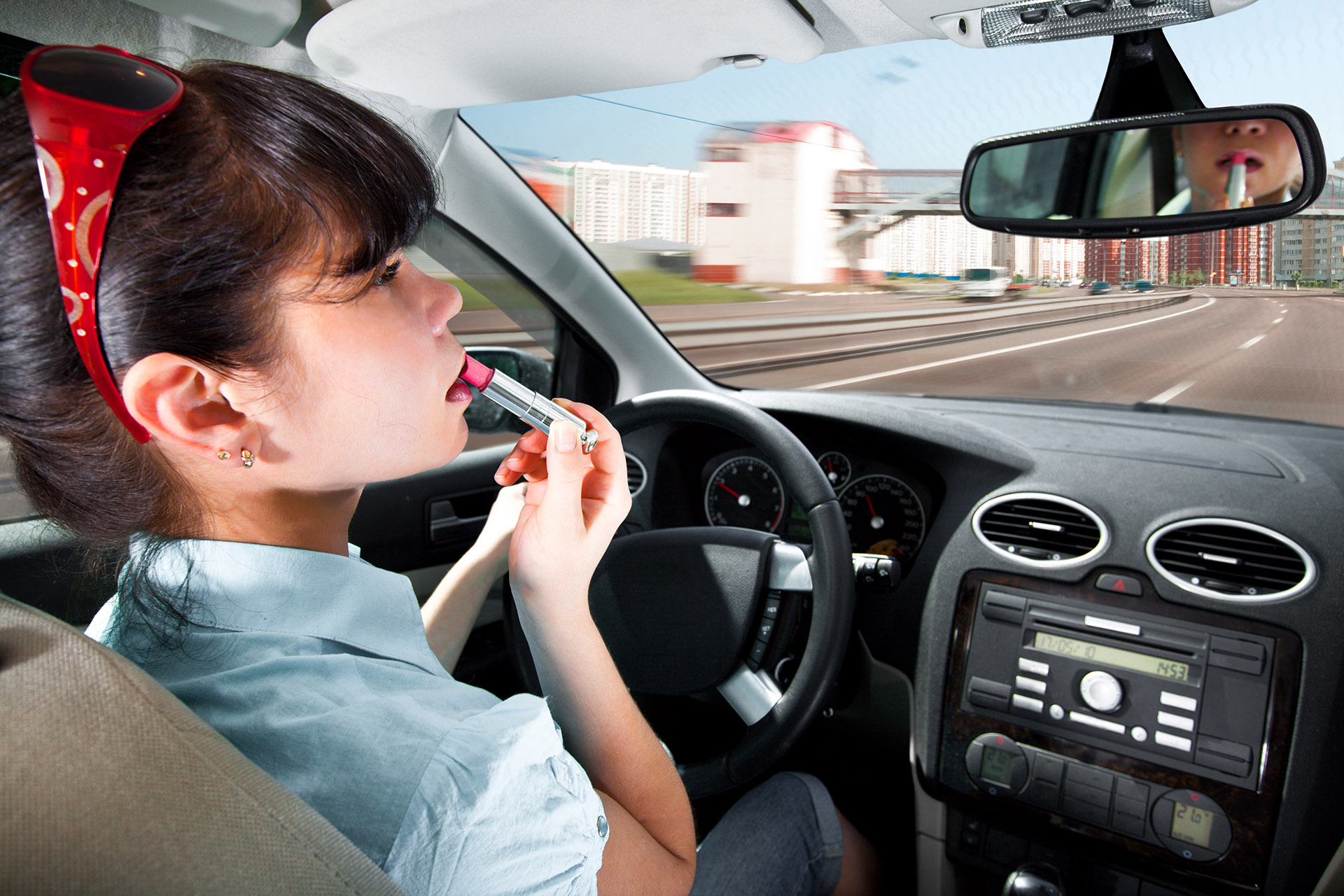 A charge for careless driving is treated as a very serious offence and may arise when an operator of a vehicle fails to operate the vehicle in manner that would be expected for an "ordinary prudent driver". Furthermore, an even more serious version of the charge exists where a driver fails to operate a vehicle in a manner of an "ordinary prudent driver" and death or injury occurs as a result.
Note: Please contact DefendCharges.Lawyer by phone at: (647) 977-5997 to discuss any specific questions that you may have.
The Law
What Legally Constitutes As Careless Driving?
The offence of careless driving is a relatively vague yet broadly applicable charge. The offence of careless driving is specifically defined as per the Highway Traffic Act, R.S.O. 1990, c. H.8 wherein it is stated:
Careless Driving
130 (1) Every person is guilty of the offence of driving carelessly who drives a vehicle or street car on a highway without due care and attention or without reasonable consideration for other persons using the highway.
Penalty
(2) On conviction under subsection (1), a person is liable to a fine of not less than $400 and not more than $2,000 or to imprisonment for a term of not more than six months, or to both, and in addition his or her driver’s licence or permit may be suspended for a period of not more than two years.
Careless Driving Causing Bodily Harm or Death
(3) Every person is guilty of the offence of driving carelessly who drives a vehicle or street car on a highway without due care and attention or without reasonable consideration for other persons using the highway and who thereby causes bodily harm or death to any person.
Penalty
(4) On conviction under subsection (3), a person is liable to a fine of not less than $2,000 and not more than $50,000 or to imprisonment for a term of not more than two years, or to both, and in addition his or her driver’s licence or permit may be suspended for a period of not more than five years.
Deemed Lack of Reasonable Consideration
(5) For the purposes of subsections (1) and (3), a person is deemed to drive without reasonable consideration for other persons using the highway if he or she drives in a manner that may limit his or her ability to prudently adjust to changing circumstances on the highway.
Sentencing — Aggravating Factor
(6) A court that imposes a sentence for an offence under subsection (3) shall consider as an aggravating factor evidence that bodily harm or death was caused to a person who, in the circumstances of the offence, was vulnerable to a lack of due care and attention or reasonable consideration by a driver, including by virtue of the fact that the person was a pedestrian or cyclist.
As said and shown above, what constitutes as careless driving is defined vaguely as a operating a vehicle "without due care and attention or without reasonable consideration for other persons"; and thus actual court cases often require a review of previous judicial decisions when determining, from a reasonably objective viewpoint, what is meant by "without due care and attention or without reasonable consideration for other persons". Examples for review may include:
- Whether changing a radio station is "without due care and attention or without reasonable consideration for other persons"?
- Whether two-handed eating while steering with knees is "without due care and attention or without reasonable consideration for other persons"?
- Whether glancing at a map while trying to navigate an unfamiliar city is "without due care and attention or without reasonable consideration for other persons"?
- Whether reading a report in preparation of a morning meeting while commuting to work is "without due care and attention or without reasonable consideration for other persons"?
How Is the Meaning of Due Care and Attention Legally Defined?
To determine what actually is "without due care and attention or without reasonable consideration for other persons" requires something more than just assessing whether some form of driving imperfection occurred. Instead, the assessment requires a hypothetical review of the conduct an "ordinary prudent driver" faced with similar circumstances. This basis for determining what actually is "without due care and attention or without reasonable consideration for other persons" was stated by the Court of Appeal within the precedent setting case of R. v. Beauchamp, 1952 CanLII 60 which is frequently cited and relied upon within more recent cases such as occurred within the case of York (Regional Municipality) v. Lam, 2017 ONCJ 290 wherein it is said:
[28] In determining the requisite standard of care and skill required of a motorist facing a charge of careless driving, I look to the often cited Ontario Court of Appeal judgment, R. v. Beauchamp, 1952 CanLII 60 (ON CA), [1953] O.R. 422, in which the standard is not one of perfection. Instead, Justice MacKay, writing for the Court, sets out the appropriate legal test as follows:
… It is whether it is proved beyond a reasonable doubt that this accused, in the light of existing circumstances of which he was aware or of which a driver exercising ordinary care should have been aware, failed to use the care and attention or to give to other persons using the highway the consideration that a driver of ordinary care would have used or given in the circumstances? The use of the term “due care”, which means care owing in the circumstances, makes it quite clear that, while the legal standard of care remains the same in the sense that it is what the average careful man would have done in like circumstances, the factual standard is a constantly shifting one, depending on road, visibility, weather conditions, traffic conditions that exist or may reasonably be expected, and any other conditions that ordinary prudent drivers would take into consideration. It is a question of fact, depending on the circumstances in each case. [Emphasis added.]
Vehicle Defined Broadly
What Types of Vehicles Are Included Within the Law of Careless Driving?
Interestingly, the charge of careless driving, as per section 130 of the Highway Traffic Act as provided above, applies to the operation of a "vehicle" unlike many other sections of the Highway Traffic Act that apply to a "motor vehicle". Whereas section 1 of the Highway Traffic Act defines "vehicle" as including bicycle, and any vehicle propelled by muscular power, a person on a bicycle, among other vehicles without a motor, can be charged with careless driving. Specifically, the definitions of "bicycle" and "vehicle" per the Highway Traffic Act are stated as:
“bicycle” includes a tricycle, a unicycle and a power-assisted bicycle but does not include a motor assisted bicycle;
“vehicle” includes a motor vehicle, trailer, traction engine, farm tractor, road-building machine, bicycle and any vehicle drawn, propelled or driven by any kind of power, including muscular power, but does not include a motorized snow vehicle or a street car;
Penalties
What Are the Potential Punishments Applicable to Careless Driving?
Upon conviction for careless driving, meaning general careless driving charge as prescribed within section 130(1) of the Highway Traffic Act rather than careless driving causing death or injury charge as prescribed within section 130(3) of the Highway Traffic Act, serious consequences should be expected. The consequences include a fine ranging from $400 and $2,000 plus a victim surcharge. The convicted driver also accumulates six (6) demerit points as well as being subjected to a possible two (2) year license suspension and even jail for up to six (6) months. Additionally, increased insurance rates are likely as is the likelihood of insurance coverage being available only from a high-risk insurance provider.